
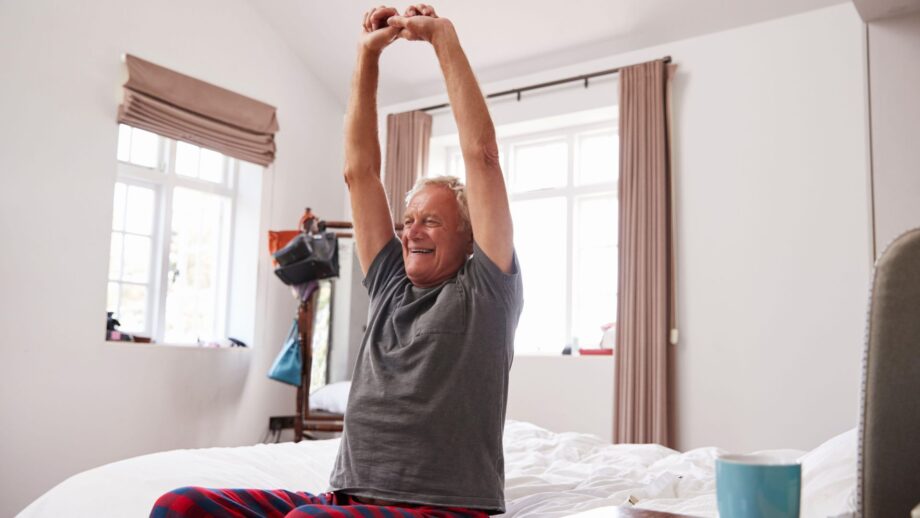
Why Stretching is Your Key to Longevity
As we age, muscles and connective tissues naturally lose elasticity and water content, leading to stiffness. However, incorporating a daily stretching routine is one of the most effective, low-impact ways for seniors to combat this natural decline. Consistent stretching is crucial for healthy aging, supporting independence, improving balance to prevent falls, and managing chronic pain.
Key Benefits of Daily Stretching for Seniors:
- Enhances Balance: Improves flexibility and coordination, which significantly decreases the likelihood of falls, a major health concern for older adults.
- Maintains Independence: By counteracting age-related decline, stretching makes everyday tasks like bending, reaching, getting in and out of a chair, and walking much easier.
- Alleviates Chronic Pain: Helps manage discomfort from chronic conditions common in older age, such as arthritis and lower back pain, by relieving muscle tension and lubricating joints.
- Boosts Circulation: Increases blood flow to muscles and joints, delivering essential nutrients and helping speed up recovery. Studies also show that consistent stretching can help keep arteries flexible, potentially lowering blood pressure.
Stretching and Arthritis: Reducing Pain and Stiffness
Stretching is one of the most effective, low-impact ways for seniors to manage the symptoms of arthritis, primarily by improving joint function and mobility, reducing pain and stiffness, and potentially lowering inflammation. It is a crucial part of a comprehensive arthritis management plan.
Key Effects of Stretching on Arthritic Joints:
- Improved Range of Motion: Gentle, regular stretching helps maintain joint flexibility and prevents muscles from becoming shorter and less mobile over time, making everyday tasks easier.
- Reduced Pain and Stiffness: Stretching increases blood flow and circulation, which aids in reducing stiffness, pain, and localized inflammation.
- Joint Lubrication: Movement promotes the production and circulation of synovial fluid, which acts as a lubricant for the joints, protecting the cartilage and allowing for smoother movement.
Safety Guidelines for Arthritis:
- Warm-up is Essential: Always perform static stretching after a 5-10 minute warm-up, such as light walking, to increase muscle temperature.
- Avoid During Flare-ups: Do not stretch a joint that is actively inflamed or experiencing an acute flare-up of arthritis.
- Listen to Pain: Stretching should only produce a feeling of mild tension, never sharp or severe pain. If pain lasts for more than two hours after a session, you may be pushing too hard.
Gentle Stretches You Can Do While Seated
These stretches are ideal for those with balance concerns or limited mobility, as many can be done while seated for safety and comfort. Always use a sturdy chair without wheels for support.
Safe and Effective Seated Stretches:
- Seated Knee Extension: Slowly extend one leg out straight in front of you, holding for 1-2 seconds, then slowly lower. Repeat 10 times per leg.
- Seated Hip March: Lift one knee up toward your chest as high as is comfortable, hold for 3 seconds, then slowly lower the foot.
- Seated Piriformis Stretch: Sit on the edge of the chair, place your ankle on top of the opposite knee, and gently lean forward from your hips until you feel a stretch in the buttock area.
- Lying Knee Bends (Heel Slides): While lying on your back, slowly slide one heel toward your bottom, bending the knee as far as comfortable.
Safety Reminders: Move slowly and smoothly, without bouncing. Breathe normally throughout the stretches.
Dynamic vs. Static Stretching: When to Use Each
The primary difference between dynamic and static stretching lies in the nature of the movement: dynamic stretching involves movement through a range of motion, while static stretching involves holding a position. The key for seniors is using the correct type at the correct time.
Dynamic Stretching (The Warm-up)
Dynamic stretches involve active, controlled movements that prepare the body for action by warming up the muscles and increasing blood flow.
- When to Use: Before any exercise, workout, or physical activity.
- Principle: Choose controlled movements that mimic the activity you’re about to perform, such as hip marches or ankle circles before a walk.
- Benefit: Reduces injury risk and enhances performance by ensuring muscles are warm and prepared.
Static Stretching (The Cool-down)
Static stretching involves holding a specific position to lengthen a muscle for a set period, used to improve long-term flexibility and help the body relax and recover.
- When to Use: After physical activity when muscles are warm and pliable.
- Principle: Move gently into the stretch and hold the position for 15 to 60 seconds without any bouncing.
- Benefit: Aids recovery by removing waste products like lactic acid and helps maintain flexibility and range of motion.
Final Insight: Supporting Your Mobility
Stretching primarily affects the muscles, tendons, and connective tissues, improving their elasticity and flexibility. While stretching has some positive effects on bone health (such as improved blood flow) , it does not build bone density in the same way that weight-bearing or resistance exercises do. For optimal health, a well-rounded fitness program must include a combination of flexibility, strength, and balance exercises.
Need Support for Your Joints and Flexibility?
For comprehensive daily support, explore our specialized supplements in the Vitamin Plus Center.