Thanks for being here for our new series launch, Get to Know Your Vitamins. Each article will explore the best food sources, recommended amounts, what each nutrient does, and any health considerations seniors may want to be aware of. We hope you find the series informational and helpful, and what better way to kick it all off than with the all-powerful Vitamin C.
Vitamin C
L-ascorbic acid is Vitamin C, it’s a water-soluble vitamin that is crucial for the everyday function, development, and regeneration of tissues. Vitamin C is consistently ranked as an essential “Tier 1” nutrient for seniors for a variety of reason.
Why Vitamin C Matters More as We Age
Because the risk of deficiency increases significantly with age, vitamin C is essential as a “foundational” nutrient. It is unique because it is the primary antioxidant that recycles other antioxidants (like Vitamin E) and is necessary for almost every structural tissue in the body.
Often cited by nutrition researchers, Vitamin C is typically ranked #1 or #2 (often tied with Vitamin D and Zinc) for maintaining a weakening aging immune system. Experts often rank Vitamin C as the #1 anti-aging vitamin due to its dual role in inhibiting melanin (preventing age spots) and being mandatory for collagen production to prevent wrinkles and thinning skin. Some long-term studies have identified Vitamin C blood levels as one of the best predictors of overall survival and cognitive preservation for older adults over 65.
Key Functions
Vitamin C is especially critical for seniors because it directly addresses several physiological challenges of aging. Beyond general health, it serves as a vital tool for maintaining independence and quality of life.
1. Counteracting a Weakening Immune System
As we age, immune defenses naturally decline, increasing vulnerability to infections.
- Immune Cell Support: Helps increase the production of white blood cells that defend against viruses and bacteria.
- Faster Recovery: While it may not prevent illness, Vitamin C can help shorten recovery time and reduce symptom severity.
2. Supporting Skin Integrity and Wound Healing
Aging skin loses elasticity, thins, and takes longer to repair.
- Collagen Production: Essential for collagen formation, helping skin stay resilient and wounds heal more efficiently.
- Skin Renewal: Emerging research suggests Vitamin C may help support skin thickness by activating cell-growth pathways.
3. Preserving Cognitive Function and Brain Health
Oxidative stress contributes to age-related cognitive decline.
- Brain Protection: Acts as an antioxidant that helps protect brain cells from oxidative damage.
- Cognitive Performance: Higher Vitamin C levels are associated with better memory and processing speed in older adults.
4. Protecting Bone and Joint Health
- Bone Support: Helps protect bone tissue by reducing oxidative stress linked to bone loss and fractures.
- Joint Comfort: May help lower chronic inflammation associated with joint stiffness and arthritis discomfort.
5. Enhancing Nutrient Absorption
- Iron Uptake: Significantly improves absorption of plant-based iron, helping reduce fatigue and support energy levels.
Vitamin C is considered a top-tier essential because it is the only vitamin that simultaneously supports immunity, bone structure, skin integrity, and brain health through its potent antioxidant and collagen-building properties.
Unfortunately, it can’t be produced by humans and humans can’t store it; therefore, it must be obtained through diet or supplements. Luckily there are plenty of foods we can add to our diet to ensure we get our daily recommended amount of this important nutrient.
Best Food Sources
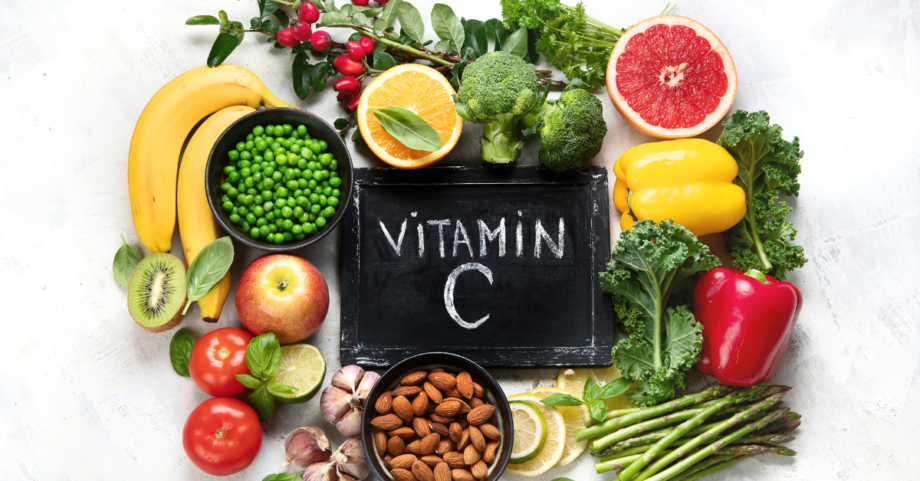
In 2026, nutritional guidelines emphasize that for seniors, the quality and variety of Vitamin C sources are important, as whole foods provide fiber and other essential phytonutrients. Fortunately, Vitamin C is widely available in both fruits and vegetables, making it one of the easiest nutrients to obtain through diet.
Top Fruit Sources
- Guavas: A single fruit contains about 125 mg (139% DV).
- Kiwifruit: One medium kiwi provides roughly 64 mg.
- Papayas: One cup of fresh papaya offers nearly 88 mg.
- Strawberries: One cup of sliced strawberries provides about 97 mg.
- Citrus Fruits: A medium orange offers about 70–83 mg, while half a grapefruit provides roughly 39 mg.
Top Vegetable Sources
- Bell Peppers: Yellow and red peppers are the highest common sources; just 1/2 cup of raw red pepper provides 95 mg.
- Cruciferous Vegetables:
- Broccoli: 1/2 cup cooked provides 51 mg.
- Brussels Sprouts: 1/2 cup cooked offers 48 mg.
- Leafy Greens: One cup of raw kale contains approximately 80 mg, and mustard spinach provides 195 mg per raw cup.
- Potatoes: One medium baked potato provides about 17–22 mg, making it a stable contributor to daily intake.
“Super-Concentrated” Specialty Sources
If you are looking for the highest concentrations per gram, these rare sources are at the top of the 2026 lists:
- Kakadu Plum: The world’s richest known source, with up to 480 mg in just one plum.
- Acerola Cherries: 1/2 cup delivers a massive 822–1,650 mg.
Important Cooking Tip for Seniors
Vitamin C is heat-sensitive and water-soluble. To maximize intake:
- Eat fruits and vegetables raw whenever possible.
- If cooking, use steaming or microwaving for 5 minutes or less rather than boiling, which can leach the vitamin into the water.
Recommended Dietary Allowance
Please keep in mind that this information is for general knowledge and should not be taken as medical advice. Consult with a healthcare provider for personalized recommendations.
Standard Daily Requirements (RDA)
- Men (51+ years): 90 mg per day.
- Women (51+ years): 75 mg per day.
For those seniors that are vitamin C deficient (less than 10 mg/day) it can lead to scurvy, characterized by bleeding gums, fatigue, joint pain, and poor wound healing.
For all adults, including seniors, there is a Tolerable Upper Intake Level (UL) for vitamin C. In 2026, the Tolerable Upper Intake Level (UL) for Vitamin C remains 2,000 mg per day for all adults, including seniors.
Important Considerations for Seniors
- Optimal Range: Some research and 2026 updates suggest that for older adults, the most effective daily intake for tissue saturation is approximately 200 mg to more effectively saturate cells and prevent chronic disease in older adults, with doses above 400 mg offering no additional benefit as the excess is simply excreted.
- Medical Supervision: Some clinical studies suggest avoiding routine “megadoses” (over 1,000 mg/day) for seniors unless specifically recommended and monitored by a physician due to potential increased risks of side effects at higher levels.
- Absorption: While the upper limit is the same, age-related physiological changes can sometimes affect how efficiently the body absorbs and utilizes Vitamin C.
Risks of Exceeding 2,000 mg/day
Consuming more than this limit, especially through high-dose supplements, can lead to:
- Gastrointestinal Distress: Most commonly includes osmotic diarrhea, nausea, abdominal cramps, bloating, and heartburn.
- Kidney Stones: Excessive intake can increase urinary oxalate levels, which may lead to stone formation, particularly in individuals with a history of kidney disease or stones.
- Iron Overload: High doses can exacerbate iron accumulation in people with medical conditions like hemochromatosis.
Safety Considerations
Even though the recommended dietary allowance is considered safe for most healthy seniors, those with specific medical profiles should be aware of potential concerns.
1. Medication Interactions
Even at RDA levels, Vitamin C can influence the effectiveness or absorption of several common medications:
- Blood Thinners: High Vitamin C intake can potentially lower the effectiveness of Warfarin (Jantoven), increasing the risk of blood clots.
- Statin and Niacin: In some cases, antioxidant supplements can interfere with the heart-protective effects of certain cholesterol-lowering medications.
- Stomach Acid Reducers: Medications like Antacids or Proton Pump Inhibitors (e.g., omeprazole) can reduce stomach acid, which may impair your body’s ability to absorb the Vitamin C you consume.
- NSAIDs: Long-term use of aspirin or ibuprofen can increase the amount of Vitamin C lost in your urine, potentially leading to lower-than-expected levels even if you meet the RDA.
2. Pre-existing Health Conditions
Seniors with the following conditions should monitor their intake closely, as even standard amounts may require medical adjustments:
- Chronic Kidney Disease (CKD): Because the kidneys excrete excess Vitamin C, those with impaired kidney function may experience a buildup of oxalate (a byproduct), which can lead to kidney stones or tissue damage.
- Iron Overload (Hemochromatosis): Vitamin C significantly enhances iron absorption. For seniors with conditions that cause the body to store too much iron, meeting or exceeding the RDA can affect iron accumulation and damage organs.
- G6PD Deficiency: In rare cases, high doses of Vitamin C can cause hemolytic anemia (the breakdown of red blood cells) in individuals with this inherited metabolic condition.
3. Interference with Medical Tests
Vitamin C can alter the chemical reactions used in certain diagnostic tests, potentially leading to false results for:
- Blood Sugar Tests: It may affect the accuracy of some glucose monitoring systems.
- Stool Tests: High levels can interfere with tests for hidden (occult) blood used in colon cancer screenings.
While the RDA is a safe baseline for most, seniors should always inform their doctor of their Vitamin C intake—whether from food or supplements—to ensure it does not conflict with their specific medical regimen or diagnostic accuracy.
Conclusion
Vitamin C plays a uniquely important role in healthy aging — supporting immune defenses, skin and connective tissue, brain health, and nutrient absorption, while also helping the body manage oxidative stress. Because our bodies can’t produce or store it, consistent intake through food — and when appropriate, supplementation — is essential, especially as we age.
Thank you for taking the time to explore the first article in our Get to Know Your Vitamins series. We’d love to hear your thoughts — feel free to share your experiences or questions on our Facebook or Instagram pages and join the conversation. And if you’re looking for a thoughtfully formulated option that includes Vitamin C alongside other immune-supporting nutrients, our Emergency Immune Support supplement was designed to help support daily wellness during times when immune health matters most.