
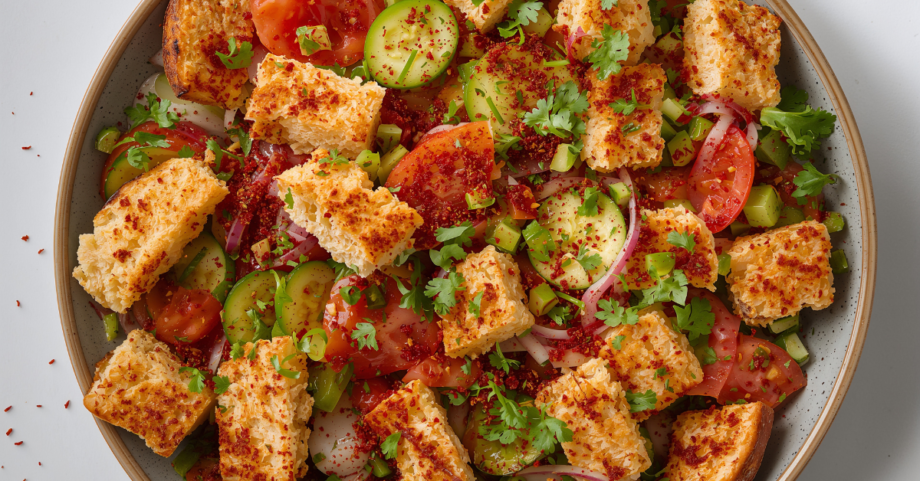
As we continue exploring flavorful, nutrient-rich meals designed to support healthy aging, the Healthy Senior Salad Series takes us abroad once again—this time to the Eastern Mediterranean. Each salad in this series highlights time-tested ingredients, simple preparation methods, and nutritional benefits that align with the unique needs of older adults.
Fattoush Salad (Peasant Salad)
Fattoush has a long history as a “peasant salad,” originating in Northern Lebanon. It was created by farmers as a resourceful way to repurpose stale flatbread, reflecting a cultural philosophy of sustainability and minimizing food waste. The name is derived from the Arabic word fatt, meaning “crush” or “to break into small pieces”. This refers to the signature toasted or fried pita “crumbs” that give the salad its texture. A standard version of Fattoush focuses on fresh, seasonal produce and a signature tangy vinaigrette. While recipes vary slightly by region, the following ingredients are the most widely used today:
Core Salad Base
- Pita Bread: The essential component, typically broken into pieces and either fried, toasted, or air-fried until golden and crispy.
- Romaine Lettuce: The standard crisp leafy green used as the base.
- Persian Cucumbers: Preferred for their crunch and lack of large seeds.
- Tomatoes: Roma or vine-ripened tomatoes are common, though cherry tomatoes are often used for convenience.
- Radishes: Added in thin slices or quarters to provide a peppery bite.
- Green Onions (Scallions): Used for a mild onion flavor that doesn’t overpower the other ingredients.
Fresh Herbs & Extras
- Parsley and Mint: Large amounts of fresh, chopped flat-leaf parsley and mint are critical for the salad’s bright flavor.
- Bell Peppers: Often included (green or red) for additional sweetness and color.
- Purslane: A traditional, tangy succulent still found in highly authentic versions but often omitted or substituted with watercress or arugula if unavailable.
The Zesty Dressing
The dressing is what distinguishes Fattoush from other garden salads. Standard ingredients include:
- Extra Virgin Olive Oil: High-quality oil is essential for the base.
- Fresh Lemon Juice: Provides the primary acidic component.
- Pomegranate Molasses: A thick, tart syrup that adds a unique sweet-and-sour depth.
- Sumac: A deep-red, lemony spice that is non-negotiable for authentic flavor.
- Garlic: Finely minced or pressed to infuse the vinaigrette.
- Dried Mint: Often added to the dressing for a concentrated herbal note.
This tradition of using fresh, seasonal ingredients mirrors many of the dietary patterns found in long-living populations.
What Nutritionist Say
Fattoush is highly regarded by nutritionists as a “functional food” because its ingredients provide specific therapeutic benefits, particularly for cardiovascular and metabolic health.
Fresh Vegetables (The Hydrating Base)
- Romaine Lettuce: Provides Vitamin K (essential for bone health and blood clotting), Vitamin A, and folate.
- Persian Cucumbers: Extremely hydrating due to high water content, aiding seniors in maintaining proper fluid balance.
- Tomatoes: A major source of lycopene, an antioxidant that supports heart health, along with potassium and Vitamin C.
- Radishes & Green Onions: Add fiber for digestive health and sulfur compounds that may have anti-inflammatory properties.
The Dressing (Healthy Fats & Bioactives)
- Extra Virgin Olive Oil: Rich in oleic acid (monounsaturated fat) and polyphenols, which can reduce “bad” LDL cholesterol and systemic inflammation.
- Sumac: This signature spice has powerful antioxidant and anti-diabetic effects; studies show it can help lower blood sugar and improve insulin sensitivity.
- Pomegranate Molasses: Contains punicalagins, potent antioxidants that may protect against memory loss and support arterial health.
- Lemon Juice: Provides a concentrated dose of Vitamin C to boost the immune system and assists the body in absorbing fat-soluble vitamins from the oil.
The Topping (The Crunch)
- Pita Bread: Offers complex carbohydrates for energy.
- Senior Health Note: In 2026, it is recommended to toast rather than fry the pita to keep calories manageable (approx. 316 calories per cup for the whole salad) and to mitigate spikes in blood sugar.
Nutritional Snapshot (Per 1-Cup Serving)
A single cup of Fattoush delivers a wide range of essential nutrients with relatively low calories.
- Vitamin C: 28-40 mg average content, which benefits immune support and collagen production.
- Vitamin A: 3,000-4800 IU average content, which benefits vision and skin health.
- Fiber: 2.8-3.0 g average content, which benefits digestion and blood sugar control.
- Monounsaturated Fat: 9-17 g average content, which benefits heart health and cholesterol management.
Health Benefits for Seniors
Fattoush has therapeutic benefits specifically tailored to the biological needs of seniors.
Cardiovascular Protection
- Reduced Risk: Adherence to Mediterranean eating patterns like Fattoush is associated with a reduction in major cardiovascular events and a reduction in stroke.
- Arterial Health: Ingredients like olive oil and pomegranate molasses improve the elasticity of blood vessels and prevent the buildup of arterial plaque.
- Blood Pressure: Regular consumption can help decrease systolic blood pressure.
Metabolic & Diabetes Management
- Glucose Control: Eating fiber-rich vegetables (like those in Fattoush) before carbohydrates significantly reduces blood sugar spikes.
- Insulin Sensitivity: The spice sumac and pomegranate molasses have been shown to lower fasting blood glucose and improve insulin sensitivity in type 2 diabetics.
- Low Glycemic Load: With an estimated glycemic load of only 6, it is an ideal choice for maintaining stable blood sugar.
Cognitive & Brain Health
- Dementia Prevention: Seniors consuming more than half a tablespoon of olive oil daily have a lower risk of dying from dementia.
- Neuroprotection: Polyphenols in pomegranate and sumac may protect the brain against neurodegenerative diseases like Alzheimer’s by reducing neuroinflammation.
Anti-Aging & Longevity
- Slower Biological Aging: High intake of polyphenols from a Mediterranean diet is linked to a reduction in “methylation age,” essentially saving months of biological aging over a standard diet.
- Anti-Inflammatory: The antioxidant oleocanthal in extra virgin olive oil works similarly to ibuprofen, helping to reduce the chronic inflammation that often causes joint pain and discomfort in seniors.
Digestive & Immune Support
- Digestive Regularity: High fiber content from raw vegetables and whole-grain pita promotes healthy bowel movements and prevents constipation.
- Immune Defense: A single cup provides nearly half of the recommended daily allowance of Vitamin C, supporting immune function and collagen production for skin health.
Seniors Should Consider
While Fattoush is highly nutritious, a few thoughtful adjustments can make it even more senior-friendly.
- Digestive Sensitivity: As the digestive system slows with age, the high volume of raw vegetables and insoluble fiber in Fattoush can cause gas, bloating, or discomfort for some seniors. To mitigate this, vegetables can be lightly blanched to soften their cell walls while retaining nutrients.
- Chewing and Swallowing Difficulties: Traditional Fattoush features crispy, fried pita, which can be hard or sharp, posing a challenge for those with dental issues or swallowing difficulties.
- Solution: Toast the bread until it is crisp but not hard, or let it soak in the dressing for several minutes to soften before serving.
- Drug Interactions:
- Pomegranate Molasses: Components in pomegranate can inhibit enzymes (like CYP3A4) that metabolize certain medications, potentially leading to toxic buildup of drugs such as some antidepressants, statins, or blood thinners.
- Vitamin K: Large amounts of parsley and romaine are high in Vitamin K, which can interfere with the effectiveness of anticoagulant medications like Warfarin.
- Sodium and Heart Health: While naturally low in sodium, restaurant versions or pre-made dressings may contain high salt levels to enhance flavor. For those managing hypertension, it is best to use a homemade dressing with limited salt.
- Grease and Inflammation: Traditionally fried pita adds unnecessary trans fats and calories, which can exacerbate inflammation and digestive disorders like acid reflux or IBS. Using an air fryer or baking the pita is a safer, heart-healthy alternative.
Preparing the Dressing
The Fattoush dressing for seniors focuses on high-quality healthy fats and low-sodium flavor enhancers. The typical ratio uses three parts oil to one part acid for a balanced taste that isn’t too sharp for sensitive palates, and this ratio helps reduce acidity while improving nutrient absorption.
These are the measurements for a single large salad (serving 4–6 people):
- Extra Virgin Olive Oil: ¼ cup (60 ml).
- Fresh Lemon Juice: 2 tablespoons (30 ml) to ¼ cup (60 ml), depending on your preference for tartness.
- Pomegranate Molasses: 1 to 2 tablespoons (15–30 ml). This is the “secret ingredient” that provides a unique sweet-and-sour depth.
- Sumac: 1 to 2 teaspoons. This deep-red spice adds a natural lemony flavor without additional acidity.
- Garlic: 1 to 2 cloves, finely minced or grated. Freshly crushed garlic offers the best flavor and health benefits.
- Dried Mint: 1 teaspoon. Crumbled dried mint provides a more concentrated herbal note than fresh mint alone.
- Salt: ½ teaspoon or less. Seniors should adjust this to taste, keeping in mind that sumac already adds a savory, tart quality.
- Black Pepper: ¼ teaspoon freshly ground.
To ensure a smooth texture, place all ingredients in a small glass jar with a tight lid and shake vigorously until emulsified. This is easier than whisking and ensures the pomegranate molasses is fully incorporated.
Tips When Buying the Ingredients
- Check Ingredients: For pomegranate molasses, look for “100% pomegranate juice” with no added sugar to maintain better blood sugar control.
- Salt Content: Check sumac labels to ensure it is pure ground sumac and not mixed with salt, which is important for those managing blood pressure.
- Substitutions: If you cannot find pomegranate molasses, you can use a high-quality balsamic glaze as a backup, though the flavor will be slightly different.
There you have it, a Middle Eastern salad that has a long history that has turned out to be a very Healthy Choice for seniors. We hope you’re enjoying this trip abroad as we discover salads from around the world. Let us know which salad is your favorite, or if you have some ideas on how to make it distinctly your own. We would love to see your thoughts or photos on our Facebook or Instagram pages.
Don’t forget if you want to enhance your intake of nutrients to your diet along with these healthy salads, we have a great selection of supplements in our Vitamin Plus Center specifically picked for seniors.