
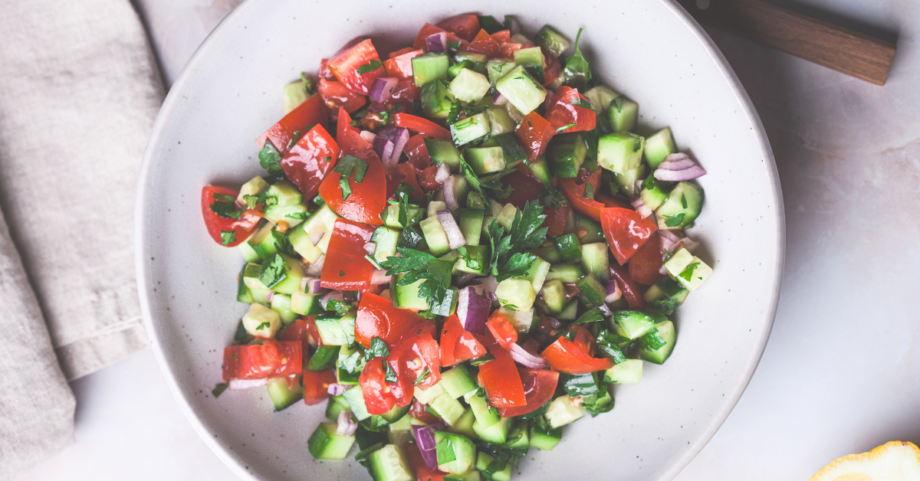
This week we visit the Middle East to find our featured salad of the week. There is such a delicious variety to choose from, it made the decision a difficult one. So, we decided that there are several salads we want to include in the series and will start with The Israeli Salad.
A Long History Throughout the Middle East
The Israeli Salad is finely diced cucumbers, tomatoes, peppers, onions, and parsley with lemon and olive oil. Jewish immigrants to the region in the late 19th century adopted cucumber, tomato, and onion, which have a long history throughout the Middle East, to make their own version of the combination. The salad was easy to make, and all the produce was readily available.
The salad became a ubiquitous dish in the communal dining halls of the early Israeli kibbutzim (farming collectives). The practice of finely dicing the vegetables, a skill considered a mark of status among kibbutz cooks, was influenced by methods from the Ottoman Empire.
The salad’s association with the country grew as it became a standard feature in Israeli hotels and restaurants, solidifying its identity as a national dish to the outside world.
Why Each Ingredient is a Healthy Choice for Seniors
Each ingredient in the Israeli salad offers distinct health benefits that are particularly valuable for seniors:
- Cucumbers: Composed of roughly 95% water, cucumbers are excellent for maintaining hydration, which is a common concern among older adults. They are a good source of fiber, which helps regulate the gastrointestinal tract and prevent constipation. Cucumbers also contain an anti-inflammatory compound called fisetin, which has been linked to improved memory and protection against age-related neurological decline.
- Tomatoes: These are rich in the powerful antioxidant lycopene, which gives them their red color and has been associated with a reduced risk of heart disease and prostate cancer. Tomatoes also offer potassium, which helps manage blood pressure, and vitamins A, C, and K, which support vision, immunity, and bone health. When eaten with healthy fats like olive oil, the body’s ability to absorb lycopene and other carotenoids increases significantly.
- Peppers: Bell peppers (especially red ones, which are the most ripe) are an exceptional source of Vitamin C—providing more than an orange—which is vital for immune function and collagen production for skin and joint health. They contain various antioxidants, including beta-carotene, lutein, and zeaxanthin, which protect the eyes from age-related macular degeneration and cataracts.
- Onions: Red onions are particularly rich in the flavonoid antioxidant quercetin, which may help lower blood pressure and cholesterol levels, reducing the risk of heart disease. Studies suggest that quercetin consumption can also improve bone density and may help protect against age-related cognitive decline.
- Parsley: This herb is a great source of Vitamin K, which is essential for blood clotting and plays a significant role in maintaining strong bones. It also provides vitamins A and C, folate, and antioxidants that contribute to overall immune health and anti-inflammatory benefits.
- Lemon and Olive Oil Dressing:
- Lemon Juice: Provides an extra boost of Vitamin C and antioxidants, supporting the immune system. The tartness can also enhance the flavor, which is beneficial if seniors have a reduced sense of taste.
- Olive Oil: This healthy fat is key to helping the body absorb fat-soluble vitamins (A, E, and K) and antioxidants (like lycopene and carotenoids) from the vegetables. It provides monounsaturated fatty acids (MUFAs), which are excellent for heart health and cognitive function.
Together, these ingredients create far more than a simple chopped salad—they form a nutrient-dense, refreshing dish that supports hydration, immunity, heart health, digestion, and cognitive function. For seniors looking to nourish their bodies with whole-food ingredients that are easy to prepare and enjoyable year-round, the Israeli Salad offers a delicious way to incorporate more vitamins, antioxidants, and healthy fats into everyday meals. It’s a perfect example of how small, flavorful choices can make a meaningful difference in healthy aging.
Key Health Benefits for Seniors
The “Israeli salad” is a very healthy option for seniors due to its rich nutrient profile, high fiber and water content, and the health benefits of its ingredients, which align well with general dietary recommendations for older adults.
- Rich in Essential Nutrients: The salad is packed with vitamins and minerals crucial for senior health.
- Vitamins C, A, and K: Tomatoes and parsley are excellent sources of these vitamins, which support immune function, vision, and bone health. Vitamin K, in particular, promotes bone health and supports memory function.
- Potassium: Cucumbers, tomatoes, and parsley offer potassium, a mineral with heart-healthy benefits that helps regulate blood pressure.
- Antioxidants and Lycopene: The vegetables contain various antioxidants, including lycopene (especially in tomatoes), which has been linked to a reduced risk of certain cancers (like prostate cancer) and improved heart health.
- Aids Digestion and Hydration: Seniors often need more fiber and hydration.
- Fiber: The vegetables provide important dietary fiber, which is crucial for maintaining healthy digestion and preventing constipation, a common concern for older adults.
- High Water Content: Cucumbers are about 95% water, which helps with hydration. The high water content in the raw vegetables also helps lubricate the digestive tract.
- Heart Health: The use of olive oil provides healthy monounsaturated fats (MUFAs) which help lower “bad” cholesterol and support cardiovascular health.
- Weight Management: The salad is low in calories but high in volume and fiber, helping seniors feel full longer and manage their weight effectively.
- Anti-inflammatory Properties: Ingredients like parsley have anti-inflammatory properties that may help ease joint pain and control blood pressure.
Overall, the Israeli salad is a nutrient-dense, refreshing, and highly beneficial addition to an older adult’s diet.
Potential Risks Depending on Existing Health Conditions
While the Israeli salad is generally very healthy for seniors, there are specific health conditions, common medications, and age-related changes in the body that may present potential risks. These risks typically depend on the individual’s existing health status.
Medication Interactions (Vitamin K)
- Blood Thinners (Anticoagulants): This is a significant risk for some seniors. Parsley is high in Vitamin K, which plays a key role in blood clotting. For individuals taking anticoagulant medications like warfarin (Coumadin), consistent daily intake of high-Vitamin K foods can make the medication less effective in preventing blood clots.
- Action Needed: Seniors on blood thinners must maintain a consistent daily intake of Vitamin K and should consult with their doctor or a registered dietitian before significantly changing their consumption of parsley or other high-Vitamin K leafy greens.
Kidney Function and Potassium Levels
- Chronic Kidney Disease (CKD): As kidney function naturally declines with age, the kidneys may become less efficient at removing excess potassium from the blood. The Israeli salad ingredients (tomatoes, cucumbers, and peppers) are moderate sources of potassium.
- Hyperkalemia Risk: High levels of potassium in the blood (hyperkalemia) can cause serious issues, including muscle weakness, an irregular heartbeat, or even cardiac arrest in severe cases.
- Action Needed: Seniors with kidney disease should have their potassium levels monitored via blood tests and should follow a doctor-approved diet plan regarding high-potassium foods.
Digestive Sensitivities and Acid Reflux
- Digestive Discomfort: Raw vegetables, particularly onions and peppers, contain tough fibers (like cellulose) and certain carbohydrates (FODMAPs) that can be difficult for some sensitive senior digestive systems to break down. This can lead to gas, bloating, and abdominal pain.
- Acid Reflux/GERD: Tomatoes and the lemon juice in the dressing are highly acidic. These can trigger or worsen heartburn and acid reflux symptoms in seniors, whose lower esophageal sphincter may naturally weaken with age.
- Action Needed: Seniors with pre-existing gut conditions like IBS or GERD may need to moderate their intake or even slightly cook some of the vegetables (like steaming the peppers or blanching the onions) to make them easier to digest.
Food Safety Concerns
- Weakened Immune Systems: Seniors and immunocompromised individuals are at a higher risk of developing severe complications from foodborne illnesses caused by bacteria like Listeria or E. coli, which can sometimes be found on raw produce.
- Action Needed: It is crucial to practice strict food safety: wash all vegetables thoroughly under running water, ensure clean cutting surfaces and utensils are used, and store the salad correctly in the refrigerator.
While these considerations are important, most risks can be managed with simple adjustments or guidance from a healthcare provider. With a little awareness, seniors can continue enjoying the Israeli Salad as a fresh, nutritious part of their diet.
Modifications to Address Specific Dietary Restrictions and Health Concerns
To make the Israeli salad an even healthier and safer option for seniors, the recipe can be modified, focusing on consistency of ingredients, preparation methods, and portion control.
Tips for Managing Medication Interactions (Warfarin/Blood Thinners)
The key to managing Vitamin K intake for seniors on blood thinners is consistency, not avoidance.
- Maintain Consistent Parsley Intake: Do not suddenly add large amounts of parsley one day and none the next. Decide on a standard portion size (e.g., 1 tablespoon of chopped parsley per serving) and stick to that amount daily or weekly. This allows doctors to adjust medication dosages appropriately.
- Consult a Healthcare Provider: Seniors on blood thinners should always discuss significant dietary changes or the regular addition of high-Vitamin K foods with their doctor or a registered dietitian.
Tips for Managing Kidney Issues (Potassium)
For seniors with chronic kidney disease or those monitoring potassium intake:
- Modify Vegetable Ratios: While the core ingredients contain moderate potassium, large portion sizes can be an issue. A doctor or dietitian can advise on appropriate serving sizes (e.g., sticking to a ½ cup raw portion size).
- Use a Low-Potassium Dressing: Ensure the dressing does not use any high-potassium additives. The standard lemon and olive oil dressing is generally fine but avoid commercially prepared dressings which might contain extra salts or potassium chlorides.
Tips for Enhancing Digestibility and Comfort
For seniors who experience gas, bloating, or acid reflux with raw vegetables:
- Ensure Fine Dicing: Emphasize the traditional fine dicing method. Smaller pieces are easier to chew and break down in the digestive tract, which is very helpful for those with dental problems or sensitive stomachs.
- Consider Partial Cooking: Slightly blanching the peppers or steaming the onions for a minute or two can soften the tough cellulose fibers, making them easier to digest without losing much of their nutritional value.
- Add a Pinch of Sweetness: A small pinch of sugar or honey can balance the acidity from the lemon and tomatoes, potentially alleviating acid reflux symptoms.
- Add Protein/Fiber Boosters: Incorporating ingredients like canned beans (cannellini or chickpeas) can increase the fiber and protein content, making the salad more filling and balanced, which helps maintain stable blood sugar levels throughout the day.
General Health Enhancements
- Control Sodium: Avoid adding excessive salt. The fresh herbs and lemon juice provide ample flavor.
- Focus on Freshness: Use the freshest organic vegetables available for the best nutrient density and flavor.
- Strict Food Hygiene: Always wash the produce thoroughly to minimize the risk of foodborne illness, which can be more severe for the elderly with weakened immune systems.
With just a few thoughtful adjustments, the Israeli Salad can be tailored to fit nearly any dietary need while preserving its fresh flavor and nutritional benefits. These small modifications help ensure seniors can enjoy the dish comfortably and confidently.
Recommended Amount of Lemon and Olive Oil to Use
The recommended amount of lemon and olive oil for an Israeli salad balances taste, health benefits, and calorie control. A standard ratio ensures the heart-healthy fats in the olive oil are used efficiently without overwhelming the salad.
For a typical Israeli salad recipe serving 4-6 people (roughly 6-8 cups of chopped vegetables), a good starting point for the dressing is:
- Extra Virgin Olive Oil: 3 to 4 tablespoons
- Fresh Lemon Juice: 2 to 3 tablespoons
This creates a ratio of approximately 1.5 parts oil to 1 part acid (lemon juice), which is a common and bright-flavored balance that uses less oil than the classic 3:1 French vinaigrette ratio, making it a lighter, healthier option.
Tips for Healthy Usage
- Whisk Thoroughly: Vigorously whisk or shake the olive oil and lemon juice in a jar until well blended or emulsified. This helps the dressing coat the finely diced vegetables evenly and prevents the oil from pooling at the bottom.
- Use High-Quality Oil: Since the dressing has few ingredients, the flavor of the olive oil is prominent. Use a high-quality extra virgin olive oil for the best flavor and maximum health benefits.
- Season to Taste, Carefully: Add salt and pepper to taste. For seniors on low-sodium diets, rely more heavily on the tang of the lemon and the flavor of fresh herbs (like mint or cilantro) rather than excessive salt.
- Add Gradually: Start with the lower amount of dressing and add more if needed. “Dress, don’t drown” the salad to keep calories lower and flavors bright.
The Israeli Salad is a beautiful reminder that healthy eating doesn’t have to be complicated. With its vibrant colors, refreshing crunch, and powerful blend of nutrients, this timeless dish offers seniors an easy way to support hydration, digestion, heart health, and overall well-being. Whether enjoyed as a side or the star of a light meal, it embodies the kind of simple, wholesome nourishment that supports longevity—one delicious bowl at a time.
If you enjoyed this week’s Healthy Senior Salad, we’d love to hear from you! Visit us on Facebook and Instagram to share your thoughts, comment on the featured salads, and connect with our growing longevity community. And while you’re on the site, don’t forget to explore the Vitamin Plus Center for high-quality supplements designed to support energy, immunity, joint health, and vibrant aging. Your journey to living well—well into your 100s—starts with simple steps like these.