
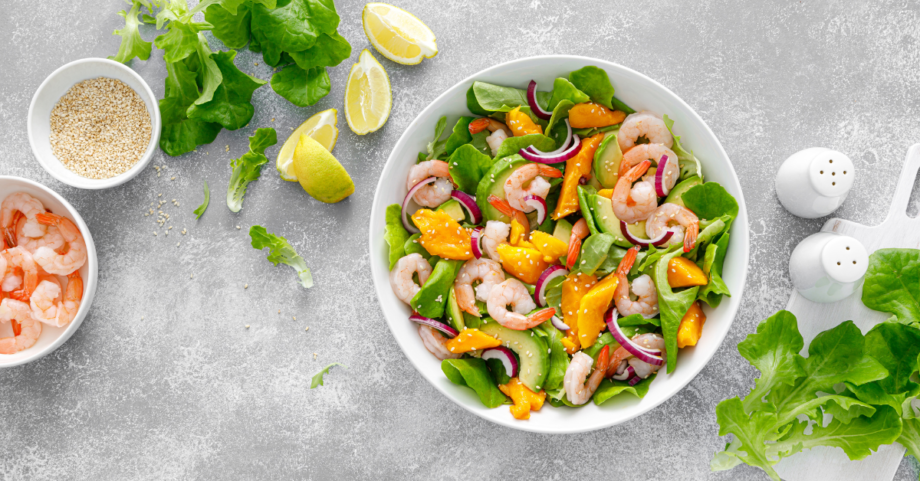
Looking to take the series abroad we left off with a Middle Eastern favorite which was well received. So, staying with an international theme, we went to Australia to sample a few of their national favorites. One of the healthiest salads that really stood out has a dynamic combination of ingredients that are not only exceptionally healthy, it also perfectly balances the sweetness of seasonal tropical fruit with local seafood. Bright, fresh, and cooling, this salad captures the feeling of an Australian summer.
The Prawn, Mango, and Avocado Salad
The salad is often described as “summer in a bowl” and is a fixture of Australian holiday entertaining. It has three core components.
- The Protein: Australian Tiger prawns.
- The Fruit: Kensington Pride or Calypso mangoes, and Haas avocado.
- The Greens: Baby cos lettuce, or a mixed leaf blend.
We would like to note that while the lettuce is easily found, as well as frozen Tiger prawns, the Kensington Pride or Calypso mangoes are found mainly in specialty providers like Melissa’s Produce. Even though they may be a bit more effort to get them, they are definitely worth it when compared with South American alternatives.
- Australian mangoes: rich, aromatic, nearly fiber-free
- South American mangoes: tart, fibrous, less aromatic
If you decide you would rather not go through the effort of finding them, then the recommended alternative would be the Kent Mango from South America.
Nutritional Aspects of Each Ingredient
Clinical research and nutritional databases categorize the core components of the Australian Prawn, Mango, and Avocado salad as a “high-density nutrient” meal, specifically beneficial for senior health.
1. Black Tiger Prawns (The Lean Protein)
- Protein & Amino Acids: Provides approx. 25g of protein per 100g, containing all nine essential amino acids necessary for maintaining senior muscle mass and immune function.
- Omega-3 Fatty Acids: Rich in polyunsaturated fats that reduce the risk of cardiovascular disease and neuroinflammation.
- Key Minerals:
- Iodine: Essential for boosting thyroid function, which regulates energy rates.
- Selenium: A powerful antioxidant (providing over 1/3 of daily requirements) that protects cells from damage.
- Vitamin B12: High levels support red blood cell formation and cognitive health.
- Astaxanthin: The pigment that gives prawns their color is a potent antioxidant linked to reducing wrinkles and age-related cell degeneration.
2. Kensington Pride / Calypso Mangoes (The “Superfruit”)
- Vitamins A & C: One 150g serving provides approx. 90% of the Daily Value for Vitamin C, crucial for collagen production and immune health, and high levels of Vitamin A for vision protection.
- Beta-Carotene: Australian mangoes contain higher levels of beta-carotene than most other fruits, acting as a defense against aging and supporting tissue repair.
- Fiber & Low GI: Provides dietary fiber for digestive health and has a low Glycemic Index (51), which helps maintain stable blood sugar levels in seniors.
- Folate & Potassium: Essential for healthy cell growth and regulating fluid balance/blood pressure.
3. Hass Avocado (The Healthy Fat)
- Monounsaturated Fatty Acids (MUFAs): Approx. 60% of an avocado’s fat is the heart-healthy variety that lowers LDL (bad) cholesterol and improves blood lipid profiles.
- Vision & Brain Support: Packed with Lutein and Zeaxanthin, antioxidants that accumulate in the eye to protect against macular degeneration and are linked to improved memory test performance in older adults.
- Nutrient Absorption: The unique fat matrix in avocados makes the absorption of fat-soluble vitamins (like the Vitamin A and E in the prawns and mango) 2 to 5 times more effective.
4. Baby Cos Lettuce (The Foundation)
- Vitamin K: An exceptional source (providing approx. 85% of the Daily Value) which is critical for bone mineral density and preventing fractures in seniors.
- Folate: High levels (up to 34% DV) support nerve function and DNA repair.
- Hydration: Composed of over 94% water, assisting in maintaining hydration levels, which can be a concern for seniors in summer.
Beyond its nutritional density, this salad supports several systems that commonly decline with age.
Health Benefits for Seniors
The nutrients in this Prawn, Mango, and Avocado salad provide specific, high-impact health benefits for seniors, particularly in the areas of cognitive function, vision, bone strength, and heart health.
1. Brain & Cognitive Health
- Vitamin B12 (Prawns): Critical for preventing anemia and maintaining nerve health. Since seniors often have reduced ability to absorb B12, the high levels found in prawns help protect against memory loss and cognitive decline.
- Omega-3 Fatty Acids (Prawns): These healthy fats act as anti-inflammatories for the brain. Research indicates they may help slow age-related cognitive decline and are vital for maintaining the structural integrity of brain cells.
- Folate (Mango & Lettuce): Works in tandem with B12 to support healthy cell division and may further reduce the risk of depression and cognitive impairment in older adults.
2. Vision Protection
- Lutein & Zeaxanthin (Avocado, Mango, Lettuce): These potent antioxidants accumulate in the retina and are scientifically proven to filter harmful blue light. They significantly lower the risk of age-related macular degeneration (AMD) and cataracts, the leading causes of blindness in seniors.
- Vitamin A (Mango): Essential for maintaining low-light vision and keeping the cornea (the eye’s outer surface) moist and healthy.
3. Bone Strength & Fall Prevention
- Vitamin K (Lettuce & Avocado): While calcium gets the attention, Vitamin K is the “glue” that helps bind calcium to the bone matrix. Adequate Vitamin K intake is directly linked to higher bone mineral density and a reduced risk of hip fractures in seniors.
- Protein (Prawns): Sarcopenia (muscle loss) is a major concern for seniors. The high-quality protein in prawns helps preserve muscle mass, which is crucial for balance, mobility, and preventing falls.
- Magnesium & Phosphorus (Prawns): Both minerals work alongside calcium to maintain the structural integrity of bones.
4. Heart & Digestive Health
- Potassium (Mango, Avocado, Prawns): Helps counteract the effects of sodium, effectively helping to lower blood pressure and reduce strain on the cardiovascular system.
- Monounsaturated Fats (Avocado): Actively lower LDL (“bad”) cholesterol while maintaining HDL (“good”) cholesterol, reducing the risk of stroke and heart attack.
- Fiber (Mango, Avocado): Promotes regularity and digestive health, preventing constipation—a common issue for seniors. Fiber also plays a role in stabilizing blood sugar levels and furthering heart health by lowering cholesterol.
Potential Health Concerns
While the Prawn, Mango, and Avocado salad is highly nutritious for seniors, there are a few considerations to help ensure it is enjoyed safely.
1. Prawn-Related Considerations
- Sodium Content: Frozen prawns are often processed with salt or sodium-based preservatives. A 100g serving of processed prawns can contain over 500mg of sodium (approx. 22% of daily recommended intake), which may be a concern for those with hypertension.
- Tip: Choose raw frozen prawns instead of pre-cooked ones, as they typically have significantly lower sodium levels.
- Gout Management: Prawns contain a moderate amount of purines. For seniors with a history of gout, these can trigger episodes by increasing uric acid levels.
- Cholesterol: While prawns are high in dietary cholesterol, 2026 heart-health guidelines emphasize that they are low in saturated fat and generally safe for the heart unless an individual has a specific inherited condition like familial hypercholesterolemia.
2. Ingredient Texture and Safety
- Dental/Swallowing Ease: The naturally soft textures of ripe mango, avocado, and prawns make this a safe and easy-to-chew option for seniors with dental concerns.
- Shellfish Allergy: Seniors can develop new food allergies later in life. Shellfish is a common adult-onset allergy that can cause severe reactions.
- Food Safety: Since the prawns are often served cold, ensure they are thoroughly cooked to an internal temperature of 145°F (63°C) to eliminate risk of foodborne illness, to which seniors are more vulnerable.
Raw or Pre-cooked Frozen Prawns
1. Identifying the Type
- Raw Prawns: Look for a translucent, grey, or bluish-black appearance. The packaging will often be blue. These must be cooked to an internal temperature of 145°F (63°C) to ensure they are safe for seniors.
- Pre-Cooked Prawns: These appear opaque, white, and pink/orange. The packaging is typically pink or red. These do not technically need further cooking; you only need to thaw them safely.
2. Safety Guidelines for Seniors
For those with weakened immune systems, following strict food safety protocols is critical:
- Thawing: Thaw prawns overnight in the refrigerator or in a colander under cold running water for about 5 minutes. Never thaw at room temperature for long periods or in a microwave, as this can lead to uneven temperatures and bacterial growth.
- Reheating Pre-Cooked Prawns: While they can be eaten cold after thawing, the USDA recommends reheating previously cooked leftovers to 165°F (74°C) to eliminate potential pathogens introduced during post-processing handling.
- Avoid Overcooking: If you choose to reheat pre-cooked prawns, do so very briefly (about 1 minute) to avoid a tough, rubbery texture.
3. Cooking Raw Prawns
If you are starting with raw frozen prawns for your salad:
- Thaw and Dry: Fully thaw and pat them dry with paper towels to ensure they sear rather than steam.
- Sauté or Poach: Cook for approximately 2–3 minutes per side in a hot pan or until they form a loose “C” shape.
- Visual Cue: They are done when they turn fully opaque and white with pink/red accents.
- Cooling: Immediately transfer cooked prawns to an ice bath or a chilled plate if you intend to serve them cold in the salad to stop the cooking process.
Zesty Citrus-Chili Dressing
One of the most common dressings paired with the Prawn, Mango, and Avocado salad is a Zesty Citrus-Chili dressing. It is a light vinaigrette made with lime juice, olive oil, honey, and finely diced long red chili. Fresh coriander (cilantro) or mint is frequently added for herbal brightness.
The dressing is considered highly beneficial for seniors, primarily for its cardiovascular and anti-inflammatory properties, though it carries specific digestive risks.
Health Benefits for Seniors
- Heart Protection: Regular consumption of chili peppers (containing capsaicin) is linked to a significantly reduced risk of heart attack and stroke in seniors. It may also support healthy blood pressure.
- Immune System Support: Both citrus and chili peppers are exceptional sources of Vitamin C, which is critical for immune response and wound healing. One serving can provide nearly the full daily recommended amount.
- Metabolic Health: Capsaicin has been shown to improve insulin sensitivity and support healthy blood sugar regulation. It also possesses anti-inflammatory and antioxidant properties that help combat chronic age-related illnesses.
- Cognitive Support: Some studies suggest that capsaicin-rich diets are associated with better cognition in older adults. Additionally, Vitamin C from citrus may enhance memory and cognition in the aging brain.
- Reduced Sodium Intake: Using zesty spices like chili and lime can enhance flavor without the need for excess salt, helping seniors manage hypertension.
Health Concerns and Risks
- Digestive Irritation: The aging digestive tract naturally becomes more sensitive to capsaicin and acidic citrus. This can trigger or aggravate:
- Acid Reflux/GERD: Both chili and citrus can weaken the lower esophageal sphincter, leading to heartburn.
- Stomach Pain: Seniors with existing conditions like gastritis or Irritable Bowel Syndrome (IBS) may find spicy food exacerbates their symptoms.
- Medication Interactions: Be cautious if using grapefruit as the citrus source, as it can increase side effects for many common senior medications.
- Enamel Erosion: High acidity in citrus dressings can erode tooth enamel, especially if oral health is already compromised.
If you have no history of severe acid reflux or stomach sensitivities, the dressing is an excellent, nutrient-dense choice. To minimize risks, use mild chilis with seeds removed and ensure the oil base (like olive oil) is sufficient to help with the absorption of fat-soluble vitamins from the salad.
Bonus Section: Zesty Citrus-Chili Dressing Recipe
Yields approx. 1/2 cup (enough for 4 servings)
Ingredients
- Lime Juice: 3 tbsp (approx. 2 fresh limes). This provides the “zest” and Vitamin C.
- Extra Virgin Olive Oil: 3 tbsp. Use a high-quality oil for heart-healthy monounsaturated fats.
- Sweet Chili Sauce: 1 tbsp. This provides a mild “Aussie” sweetness and thickens the dressing.
- Honey or Agave: 1 tsp (optional, for extra balance against the lime).
- Fresh Red Chili: ½ to 1 small long red chili. For seniors: Finely mince and remove all seeds to reduce the “heat” while keeping the flavor.
- Fresh Coriander (Cilantro): 1 tbsp, finely chopped.
- Ginger: ½ tsp, freshly grated. This helps with digestion, which is excellent for seniors.
Instructions
- Prep the Chili: Cut the chili in half lengthwise and scrape out the seeds with a spoon. Finely mince the flesh.
- Combine: In a small glass jar or bowl, whisk together the lime juice, olive oil, sweet chili sauce, honey, and ginger.
- Emulsify: Shake or whisk vigorously until the oil and citrus are fully combined (emulsified).
- Finish: Stir in the minced chili and fresh coriander.
- Rest: Let the dressing sit for at least 10 minutes before serving to allow the ginger and chili flavors to infuse into the oil.
Recipe Adjustments for Seniors
- For Acid Reflux: If the lime juice is too sharp, replace 1 tbsp of lime juice with 1 tbsp of water or orange juice to lower the acidity.
- For Low-Sodium Diets: This dressing is naturally low in salt. Avoid adding extra table salt; the lime and ginger provide enough “kick” to satisfy the palate.
- For Texture: If you have difficulty with small bits of herbs, you can blend the dressing in a small food processor until completely smooth.
The Prawn, Mango, and Avocado Salad is a perfect example of how simple, thoughtfully chosen ingredients can deliver exceptional health benefits for seniors. With its balance of lean protein, healthy fats, fiber-rich fruit, and hydration-supporting greens, this dish supports heart health, cognitive function, vision protection, and bone strength—all while remaining light, refreshing, and easy to enjoy. It proves that longevity-focused eating doesn’t have to be complicated or restrictive; it can be vibrant, flavorful, and deeply satisfying.
Whether enjoyed as a summer meal or adapted year-round, this Australian-inspired salad is a reminder that nourishing the body can also be a celebration of global flavors, seasonal produce, and mindful living at every age.
Thank you for following along with our Healthy Senior Salad Series. We’d love to hear from you—have you tried this salad, or do you have a favorite longevity-friendly recipe of your own? Join the conversation by sharing your thoughts or photos on our Facebook or Instagram pages and let us know what’s inspiring you in the kitchen.
Don’t forget to look through the Vitamin Plus Center for our selection of supplements designed to support your active lifestyle.