
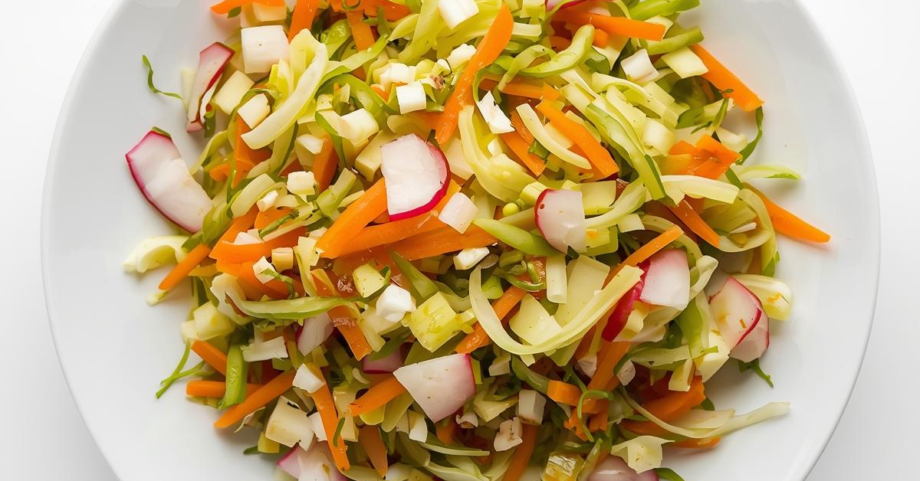
Staying in the East, we look to Tibet for this week’s salad—one shaped as much by geography and climate as by tradition. Known as Tangtse (or Trangtsel), this Tibetan cabbage salad is historically significant as one of the only true cold salads in Tibetan cuisine, where high altitude, long winters, and limited agriculture favored warm, hearty foods. Built around finely shredded cabbage and other hardy vegetables, Tangtse reflects a resourceful approach to nourishment, offering freshness, balance, and digestive support in a region where raw vegetables were once a rarity.
Tangtse (Tibetan Cabbage Salad)
Tibetan Cabbage Salad, known as Tangtse (or Trangtsel), is historically significant as the only traditional “true” salad in Tibetan cuisine. To fully appreciate why Tangtse holds a unique place in Tibetan food culture, it helps to look more closely at its name, origins, and the environment in which it developed.2
Meaning and Origins
- Etymology: The name Tangtse (or Trang tsel) literally translates to “cold vegetable”.
- Geographical Rarity: Because of Tibet’s high altitude and harsh, cold climate, raw and cold foods were traditionally rare. Most traditional meals consist of hot soups, noodles, or meat-heavy dishes to provide warmth and energy.
- Agricultural History: Cabbage (pedzey) was historically one of the very few vegetables that could survive and be cultivated in Tibet’s high-altitude environment, making it a staple ingredient for this unique dish.
This resourceful approach to food mirrors many of the dietary patterns seen in long-living populations.
Culinary Role
- Cultural Context: Historically, Tangtse was not a common daily dish for most Tibetans living inside Tibet due to the lack of fresh vegetables in many regions. It was more typical as a refreshing side dish to balance heavier main courses.
- Evolution: While once a simple, earthy dish, modern versions often incorporate ingredients like sesame oil, rice vinegar, and ginger, reflecting influences from neighboring regions and modern accessibility to a wider variety of produce.
- Modern Representation: The recipe gained broader international recognition through publications like the Lhasa Moon Tibetan Cookbook, which documents traditional recipes for a global audience.
What other vegetables are used in Tangtse besides cabbage?
While cabbage is the base of Tangtse, several other hardy vegetables are traditionally or commonly included to add texture and nutrients:
- Daikon Radish (Labu): Often thinly sliced or julienned, it provides a crisp texture and a slight peppery bite.
- Carrots: Frequently used for sweetness and color, usually julienned or coarsely grated.
- Onions: Red or white onions are often thinly sliced to add sharp flavor; some recipes suggest soaking them briefly to mellow their bite.
- Tomatoes: Modern or regional variations may include thinly sliced tomatoes for added juiciness.
- Hardy Root Vegetables: Because only resilient vegetables thrive in Tibet’s climate, variations might include turnips or potatoes (though these are more common in cooked side dishes).
- Herbs: Coriander (cilantro) and scallions are common garnishes that provide freshness.
Preparing the Vegetables
To prepare Tangtse (Tibetan Cabbage Salad), the goal is to create very fine, delicate textures that allow the light dressing to coat every piece while remaining easy for seniors to chew and digest.
The traditional and modern methods for cutting the core ingredients are as follows:
1. Cabbage (The Primary Base)
- Traditional Method: Remove the tough outer leaves and quarter the cabbage. Use a very sharp chef’s knife to cut out the triangular core from each wedge. Place the flat side of the wedge on the cutting board and slice crosswise into paper-thin strips.
- Senior-Friendly Tips:
- The Mandoline: Use a Japanese mandoline for the thinnest, most “fluffy” results, ensuring you use a safety guard or cut-resistant glove.
- Food Processor: Use the slicing blade for uniform, thin shreds.
- Pre-Wilt: For easier digestion, some recipes recommend covering the shredded cabbage with boiling water for 1–2 minutes, then draining immediately.
Finely shredding the cabbage makes the salad easier to chew and digest, especially for older adults.
2. Daikon Radish and Carrots
- Fine Julienne: For a traditional look, cut these into “matchsticks” (about 2–3mm thick). Slice the vegetable diagonally into thin rounds first, stack them, and then slice the stack into thin strips.
- Grating: Alternatively, use the coarse side of a box grater for a softer texture that is often easier for seniors to chew.
- Julienne Peeler: A specialized julienne peeler can quickly create long thin strands similar to noodles.
3. Onions and Herbs
- Onions: Quarter the onion and slice each quarter lengthwise into very thin slivers. To mellow the sharp flavor and soften the texture, toss with salt and let stand for 10 minutes, then rinse and squeeze dry.
- Cilantro: Coarsely chop or mince the leaves and tender stems.
- Ginger: Mince finely or grate using a microplane to ensure there are no large, fibrous pieces in the salad.
Cutting Safety for Seniors
- Stable Surface: Always cut the cabbage into quarters and place the flat side down to prevent it from rolling on the cutting board.
- Scissors: If the long shreds are still difficult to manage, you can use kitchen scissors to cut across the bowl and break the salad into even smaller, bite-sized pieces.
Tangtse (Tibetan Cabbage Salad) Nutrition Overview
Despite its simple ingredients, Tangtse offers meaningful nutritional value. The salad is an exceptionally low-calorie, nutrient-dense option for seniors. It is packed with fiber, which supports digestive health, and antioxidants that help reduce inflammation. The ingredients provide a strong mix of Vitamin C for immune support and Vitamin K for bone health.
White Cabbage (The Base)
Cabbage is the primary volume of the salad. It is a cruciferous vegetable known for its cancer-fighting compounds and high fiber content, which aids in maintaining regular bowel movements—a common concern for older adults. It is also a powerhouse for Vitamin K, which is essential for bone density.
- Calories: 25 kcal
- Carbohydrates: 5.8 g
- Fiber: 2.5 g
- Protein: 1.3 g
- Key Nutrients: Vitamin C (36 mg), Vitamin K (76 mcg), Folate (43 mcg).
Daikon Radish (Labu)
Daikon adds a crisp texture and a peppery bite. It is very low in calories and acts as a natural diuretic. It is rich in Vitamin C and digestive enzymes that help the body break down fats and proteins, making the meal easier to digest.
- Calories: 18 kcal
- Carbohydrates: 4.1 g
- Fiber: 1.6 g
- Protein: 0.6 g
- Key Nutrients: Vitamin C (22 mg), Potassium (227 mg), Folate (28 mcg).
Carrots
Carrots provide natural sweetness and are the best source of beta-carotene, which the body converts to Vitamin A. This is crucial for maintaining good vision and immune function in seniors.
- Calories: 41 kcal
- Carbohydrates: 9.6 g
- Fiber: 2.8 g
- Protein: 0.9 g
- Key Nutrients: Vitamin A (835 mcg RAE / >100% Daily Value), Beta-carotene (8,285 mcg).
Red Onion
Onions contain quercetin, a potent antioxidant with anti-inflammatory properties that may help manage arthritis symptoms and support heart health.
- Calories: 40 kcal
- Carbohydrates: 9.3 g
- Fiber: 1.7 g
- Protein: 1.1 g
- Key Nutrients: Vitamin C (7.4 mg), Potassium (146 mg), Quercetin (antioxidant).
Tomatoes (Optional)
If included, tomatoes add juiciness and lycopene, an antioxidant linked to reduced risk of heart disease and prostate issues.
- Calories: 18 kcal
- Carbohydrates: 3.9 g
- Fiber: 1.2 g
- Protein: 0.9 g
- Key Nutrients: Vitamin C (14 mg), Lycopene (2,573 mcg), Potassium (237 mg).
Cilantro (Coriander)
Used as a garnish, cilantro is surprisingly nutrient-dense. It helps remove heavy metals from the body and contains very high levels of Vitamin K, supporting bone health.
- Calories: 23 kcal
- Carbohydrates: 3.7 g
- Fiber: 2.8 g
- Protein: 2.1 g
- Key Nutrients: Vitamin K (310 mcg / >300% Daily Value), Vitamin A (337 mcg).
Lemon Juice (Dressing)
Lemon juice provides the acidity that “cooks” the raw vegetables slightly, softening them for better digestion. It is almost pure Vitamin C, which enhances the absorption of iron from the other vegetables.
- Calories: 22 kcal
- Carbohydrates: 6.9 g
- Fiber: 0.3 g
- Protein: 0.4 g
- Key Nutrients: Vitamin C (39 mg), Citric Acid.
Senior Health Benefits
Tibetan Cabbage Salad (Tangtse) offers specific health benefits for seniors, largely due to its high concentration of fiber, Vitamin K, and antioxidants from its raw vegetable base.
1. Digestive Health and Weight Management
- Regularity: The insoluble fiber from raw cabbage and daikon radish acts as a “natural broom,” helping to prevent constipation, a common concern for older adults.
- Satiety: High-fiber, low-calorie ingredients create a feeling of fullness, which assists in weight management as metabolism naturally slows with age.
- Gut Microbiome: Fiber feeds beneficial gut bacteria, which can boost overall immunity.
2. Bone and Joint Health
- Bone Density: Cabbage and cilantro are rich in Vitamin K, which is essential for bone mineralization and strength.
- Fracture Prevention: Studies show that seniors with higher Vitamin K intake have a reduced risk of hip fractures and osteoporosis.
- Anti-Inflammatory: Compounds like sulforaphane in cabbage and quercetin in red onions help reduce chronic inflammation, potentially alleviating symptoms of arthritis.
3. Heart Health and Blood Pressure
- Blood Pressure Regulation: The potassium in cabbage and carrots helps the body excrete excess sodium, which can lower blood pressure and reduce the risk of stroke.
- Cholesterol Management: Soluble fiber in carrots and cabbage can bind to cholesterol in the digestive tract, helping to lower overall levels.
- Vascular Health: Vitamin K helps prevent vascular calcification (the “rusting” of arteries), which is a significant factor in heart disease as people age.
4. Immune and Vision Support
- Immune Boost: A single cup of raw cabbage can provide over 50% of the daily Vitamin C requirement, which is vital for wound healing and immune function.
- Vision Protection: Carrots are a top source of beta-carotene (Vitamin A), which supports eye health and may help prevent age-related macular degeneration.
Senior Concerns
Seniors should be aware of several specific health and safety concerns when consuming Tibetan Cabbage Salad (Tangtse), primarily due to its raw ingredients and high Vitamin K content.
1. Medication Interactions
- Blood Thinners (e.g., Warfarin/Coumadin): Cabbage and cilantro are very high in Vitamin K, which promotes blood clotting and can directly counteract the effectiveness of blood-thinning medications. Seniors on these drugs must maintain a consistent intake of Vitamin K and consult their doctor before significantly increasing their cabbage consumption.
- Thyroid Medication: Raw cruciferous vegetables like cabbage contain goitrogens, which can interfere with thyroid function and the absorption of medications like levothyroxine, especially in those with iodine deficiency.
- Diabetes and Other Drugs: Cabbage may lower blood sugar levels, potentially causing them to drop too low when combined with diabetes medications. It may also interact with certain drugs broken down by the liver or medications like Oxazepam.
2. Digestive Sensitivities
- Gas and Bloating: Raw cabbage contains complex sugars and sulfur compounds that are difficult to break down. As the gut microbiome changes with age, these can cause significant gas, bloating, and abdominal discomfort.
- IBS and Reflux: For seniors with Irritable Bowel Syndrome (IBS) or sensitive digestion, the fermentable carbohydrates (FODMAPs) in raw cabbage and onions can trigger cramps or diarrhea. Cabbage may also trigger acid reflux in some individuals.
- Mitigation Tip: Massaging the cabbage with salt or letting the salad sit in dressing for 10+ minutes can help “pre-digest” the tough fibers, making it easier on the stomach.
3. Food Safety and Physical Safety
- Choking Hazard: Raw, crunchy vegetables can be difficult to chew for seniors with dental issues or swallowing difficulties (dysphagia). It is essential to shred or julienne the cabbage and carrots extra thin to reduce this risk.
- Contamination Risk: Because it is served raw, thorough washing of all vegetables is critical to prevent foodborne illnesses like E. coli or parasites, which can be more severe in older adults with weakened immune systems.
4. Nutritional Balance
- Iodine Deficiency: Excessive consumption of raw cabbage can exacerbate thyroid issues if a senior is already deficient in iodine. Ensuring a diet with adequate iodine (e.g., from seafood or iodized salt) can help mitigate this.
This is for informational purposes only. For medical advice or diagnosis, consult a healthcare provider or registered dietitian.
A Simple Path to Longevity
Tangtse is a thoughtful reminder that healthy aging is often supported by the simplest of foods. Built around crisp cabbage, light seasoning, and mindful preparation, this Tibetan salad reflects a tradition shaped by resilience, balance, and respect for digestion. Its gentle texture, hydrating ingredients, and nutrient-rich profile make it a refreshing option that supports digestive comfort, cardiovascular health, and overall vitality—especially for older adults.
We hope you’re enjoying this journey across global cuisines in the Healthy Senior Salad Series. Have you tried cabbage salads like this before, or do you prepare cabbage in another favorite way? We’d love to hear from you—share your thoughts, tips, or photos with us on our Facebook or Instagram pages and be part of the conversation.
To continue supporting your longevity journey, we also invite you to explore the Vitamin Plus Center, where you’ll find carefully selected supplements designed to complement a nutrient-rich diet and support heart health, cognitive function, immunity, and healthy aging. It’s another simple step toward building a lifestyle centered on long-term wellness and vitality.