
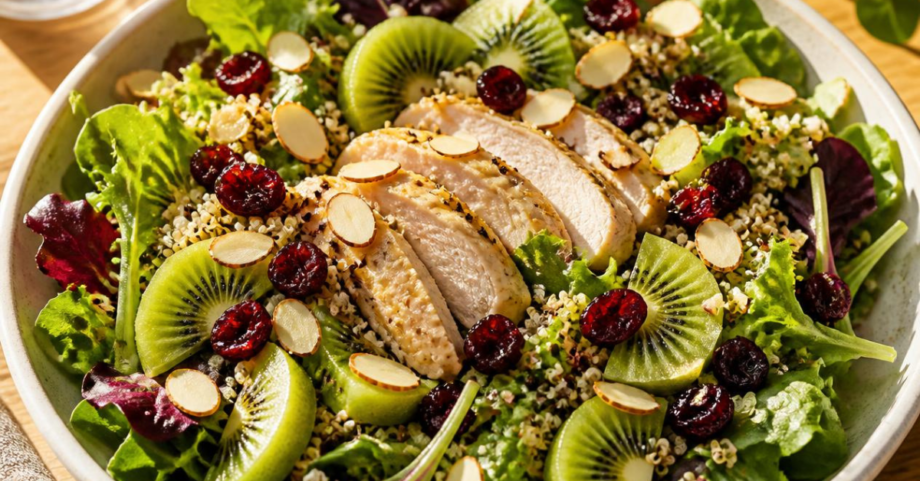
A nutrient-rich evening salad inspired by foods that may support healthy sleep.
We often think a good night’s rest begins when our head hits the pillow. But some of the choices we make hours earlier—including what and when we eat—may also play a role in how well we sleep.
As we explored in Part II of our Better Sleep After 60 series, food isn’t an on-off switch for sleep. Still, a balanced evening meal built around nutrient-rich whole foods can be part of a healthy nighttime routine.
That’s the inspiration behind this week’s addition to our Healthy Senior Salad Series. The Better Sleep Salad brings together leafy greens, lean protein, whole grains, kiwi, nuts and seeds in a light, satisfying meal designed with both healthy aging and a comfortable evening in mind.
Why You’ll Love the Better Sleep Salad
- 🥬 Nutrient-rich leafy greens provide magnesium, folate and other important nutrients.
- 🍗 Lean turkey or chicken adds satisfying protein and is a dietary source of tryptophan.
- 🥝 Fresh kiwi adds natural sweetness, vitamin C and a colorful twist—and has also been studied for its potential relationship with sleep.
- 🌾 Quinoa or brown rice provides whole-grain carbohydrates and helps turn the salad into a satisfying evening meal.
- 🎃 Pumpkin seeds or almonds add crunch along with magnesium, healthy fats and other nutrients.
- 🌙 Light enough for an evening meal, without relying on the heavy, fried or highly processed foods that can sometimes make bedtime less comfortable.
Greens, Kiwi, Grains, and Protein
Building the Better Sleep Salad is simple, colorful, and easy to customize. Tender leafy greens form the base, while kiwi adds a touch of natural sweetness. Quinoa or brown rice gives the salad a little more staying power, and lean turkey or chicken turns it into a satisfying evening meal.
A sprinkle of pumpkin seeds or sliced almonds adds crunch, while a small amount of dried tart cherries brings a pleasantly sweet-tart finish.
The Better Sleep Salad
Makes 2 servings
- 4 cups baby spinach or mixed leafy greens
- 1 ripe kiwi, peeled and sliced
- 1 cup cooked and cooled quinoa or brown rice
- 6 ounces cooked turkey or chicken breast, sliced or chopped
- 2 tablespoons roasted, unsalted pumpkin seeds or sliced almonds
- 2 tablespoons dried tart cherries
Top with a Gentle Citrus Vinaigrette:
- 1½ tablespoons extra virgin olive oil
- 1 teaspoon fresh lemon juice
- ½ teaspoon pure maple syrup or honey
- A small pinch of salt
- Freshly ground black pepper, to taste
Putting It Together
Divide the leafy greens between two bowls. Add the quinoa or brown rice, turkey or chicken, and sliced kiwi. Sprinkle the pumpkin seeds or almonds and dried tart cherries over the top.
In a small bowl, whisk together the olive oil, lemon juice, maple syrup or honey, salt and pepper until blended. Drizzle lightly over each salad just before serving and toss gently.
Serve immediately or prepare the ingredients ahead of time and keep the dressing separate until you’re ready to eat.
What Makes This a Better Sleep Salad?
No single food—or salad—can guarantee a better night’s sleep. Instead, the Better Sleep Salad brings together several foods and nutrients that researchers have studied for their possible connections to sleep, while also creating a balanced evening meal.
Lean Protein and Tryptophan
Turkey and chicken provide high-quality protein and are dietary sources of tryptophan, an essential amino acid the body uses in the production of serotonin and melatonin—both involved in the body’s sleep-wake processes.
That doesn’t mean eating turkey will make you sleepy. Think of tryptophan as one of many nutritional building blocks the body uses as part of its normal functions.
Magnesium from Whole Foods
Leafy greens, pumpkin seeds and almonds are natural sources of magnesium, a mineral involved in hundreds of processes throughout the body, including normal muscle and nerve function.
Magnesium has also attracted attention for its possible relationship with sleep. Research on magnesium supplements and sleep remains limited and mixed, however, so we shouldn’t think of magnesium-rich foods as natural sleeping pills.
For this salad, magnesium is simply another reason to appreciate nutrient-rich foods such as greens, seeds and nuts.
What About Kiwi?
Kiwi may be the most interesting ingredient in the bowl.
Small studies have explored whether eating kiwi regularly may be associated with improvements in certain measures of sleep. The research is promising enough to be interesting, but still too limited to conclude that kiwi itself improves sleep.
Fortunately, kiwi doesn’t need to be a sleep remedy to earn its place here. It adds vitamin C, fiber, color and a naturally sweet flavor that pairs beautifully with the greens and grains.
And Those Tart Cherries?
Tart cherries have also received attention because they naturally contain melatonin and other plant compounds. Some studies have reported improvements in certain sleep measures after consuming tart cherry products, but the research remains limited, and results have varied.
That’s why we’re using a small amount of dried tart cherries for what they do best in this recipe: adding a burst of sweet-tart flavor, color, and texture.
Beyond Sleep: Benefits for Healthy Aging
The ingredients in the Better Sleep Salad weren’t chosen only because of their possible connections to sleep. Together, they also provide a variety of nutrients that support overall health as we age.
Heart Health
Leafy greens, kiwi, nuts, and seeds provide nutrients such as potassium and magnesium, while extra virgin olive oil contributes heart-healthy unsaturated fats. Together, they fit comfortably into the kind of nutrient-rich eating pattern associated with cardiovascular health.
Maintaining Muscle
Getting enough protein becomes increasingly important as we age. Lean turkey or chicken provides high-quality protein and essential amino acids that help support the maintenance of muscle mass and strength.
Digestive Health
Leafy greens, kiwi and whole grains contribute dietary fiber, which supports healthy digestion. Keeping the meal relatively light may also be more comfortable in the evening than a large, heavy dinner—particularly when eaten a few hours before bedtime.
Colorful Plant Nutrition
Kiwi, leafy greens and tart cherries bring more than color to the bowl. They provide vitamins, minerals, and a variety of naturally occurring plant compounds, including antioxidants.
Of course, what makes a healthy choice for one person may need a little adjustment for another. Before putting the Better Sleep Salad on your evening menu, there are a few things worth keeping in mind—especially if you take certain medications or manage conditions such as reflux or kidney disease.
A Few Health Considerations
The Better Sleep Salad can be easily adapted to fit different needs. Here are a few things to keep in mind:
Blood Thinners and Vitamin K
Dark leafy greens such as spinach are rich in vitamin K. If you take warfarin (Coumadin), you generally don’t need to avoid these nutritious foods, but keeping your vitamin K intake reasonably consistent from day to day is important. Talk with your healthcare provider if you’re considering a significant change in how much you eat.
Reflux or Heartburn
If you’re prone to nighttime reflux or heartburn, consider eating your evening meal at least a few hours before lying down. You can also reduce or skip the lemon juice in the vinaigrette if citrus tends to bother you.
Chewing Difficulties
Pumpkin seeds and almonds can be chopped or finely ground for easier chewing. If needed, you can leave them out entirely or substitute a small amount of smooth, unsalted nut or seed butter in the dressing.
Kidney Disease or Potassium Restrictions
Some of the ingredients in this salad—including spinach and kiwi—contain potassium. People with chronic kidney disease or those who have been advised to limit potassium should follow the individualized guidance provided by their healthcare professional.
With those considerations in mind, there’s one more part of the Better Sleep Salad worth thinking about: when you eat it. An evening meal doesn’t have to be complicated, but a few simple habits around timing, beverages, and portion size may help make the hours before bed more comfortable.
Evening Dining Tips for Restful Sleep
Give Dinner Some Breathing Room
If possible, finish dinner a few hours before lying down. That gives your body time to digest the meal and may be particularly helpful if you’re prone to nighttime reflux or heartburn.
Think About Evening Fluids
Staying hydrated throughout the day is important, but large amounts of fluid close to bedtime may mean more nighttime trips to the bathroom. Consider spreading your fluids throughout the day and easing up as bedtime approaches.
Be Mindful of the Nightcap
Alcohol may initially make you feel sleepy, but it can interfere with sleep later in the night. If better sleep is the goal, an evening without alcohol may be worth trying.
Want to Learn More?
Food is only one part of the sleep story. Learn more about how meal timing, caffeine, alcohol and hydration may affect your night’s rest in Better Sleep After 60: What to Eat and Drink for a Better Night’s Sleep.
Longevity Starts with Simple Steps
The Better Sleep Salad is a reminder that healthy aging doesn’t have to be complicated. Sometimes it’s simply about bringing a few good choices together on one plate—and enjoying them as part of an evening routine that works for you.
With colorful greens, lean protein, whole grains, fruit, and a little crunch from nuts or seeds, this salad offers plenty to appreciate whether you’re interested in supporting healthy sleep or simply looking for a nutritious and satisfying dinner.
And remember, no single meal determines how well you’ll sleep or how well you’ll age. It’s the small choices we make consistently—eating nourishing foods, staying active, getting enough rest, and making time for the people and activities we enjoy—that add up over time.
Longevity starts with simple steps. Sometimes, one of those steps begins at the dinner table.
Be sure to explore the other recipes in our Healthy Senior Salad Series and join us on Facebook and Instagram for more practical ideas for living stronger, aging smarter, and making the most of the years ahead.